7 Stunning Mirror Cube Patterns That Will Look Amazing on Your Shelf
Transform your Mirror Cube into art! Discover 7 stunning patterns like the Superflip and Cube-in-a-C...
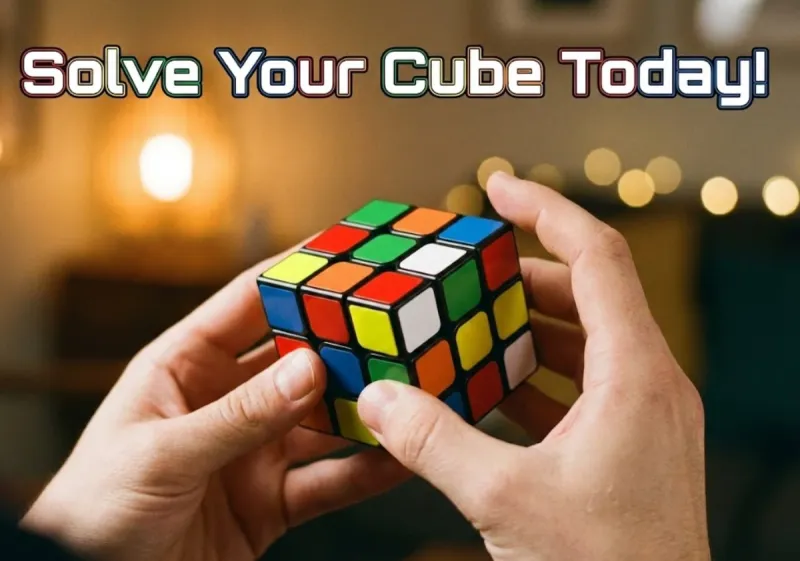
Learning to solve a Rubik's Cube is a rite of passage for many, but the journey can be unnecessarily frustrating if you fall into common traps. After guiding thousands of beginners, we've identified the specific hurdles that keep most people from reaching that satisfying click of a finished puzzle. If you want to stop struggling and start solving, here is how to avoid the most frequent mistakes.
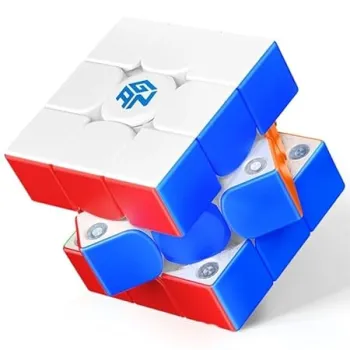
Many beginners start their journey with a stiff, 'vintage' cube from the 80s or a low-quality dollar-store replica. These cubes are often difficult to turn, lock up frequently, and make learning 'finger tricks' nearly impossible. If you're fighting your cube just to make a single turn, you're not focusing on the logic of the solve. To make your practice enjoyable, consider a modern, budget-friendly speedcube like the Cubelelo GAN 356 ME (v3-Frosted) 3x3 Magnetic Speed Cube | New Version | Premium Smooth Turning Puzzle for Speedcubing | Fast & Stable Competition-Ready Cube for Beginners & Professionals Online at Low Prices in India - Amazon.in, which offers the stability and smoothness needed for rapid progress.
While there is a certain charm in trying to figure out the cube through pure trial and error, it usually leads to burnout. The Rubik's Cube is a mathematical puzzle with millions of permutations; reinventing the wheel takes weeks, whereas learning a structured 'Layer-by-Layer' method takes hours. By following a proven guide, you experience the joy of completion much sooner, which fuels the motivation to keep learning.
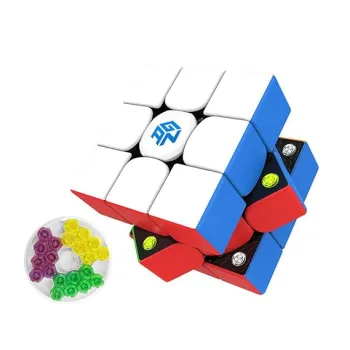
If you treat algorithms as just a random string of letters like R, U, R', U', you will likely forget them the moment you look away from your cheat sheet. The key is to watch the pieces. Understand how a specific set of moves affects the 'pairs' on the cube. High-quality magnetic cubes, such as the HELLOCUBE GAN 356 M 3x3 Magic Speed Cube Stickerless 3x3x3 Magnetic Cube Gans 356M(Standard Version with GES), provide tactile feedback that helps you feel the movement of the pieces, making it easier to build the muscle memory required to execute algorithms without thinking.
The world of cubing is vast, with methods like CFOP, Roux, and ZZ. A common mistake is trying to learn advanced techniques before mastering the basics. This leads to confusion and a mix-up of different algorithm sets. Stick to the beginner’s method until you can consistently solve the cube in under two minutes. Only then should you look into more complex systems.
Even a great speedcube can become sluggish over time due to dust and friction. Many beginners don't realize that a single drop of specialized lubricant can completely change the feel of their puzzle. Using a professional-grade solution like SpeedCubeShop Stardust Professional Speed Cube Lubricant 5ml can reduce friction and prevent the plastic from wearing down, ensuring your cube stays fast and controllable as you increase your speed.

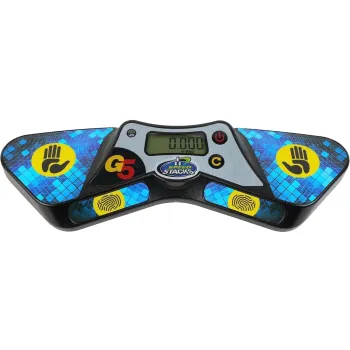
Judging your progress by a wall clock or a phone app is fine at first, but it doesn't help you develop the 'competition feel' or track your stats accurately. To truly see how your efficiency is improving, many cubers use a dedicated device. The Speed Stacks Stackmat Pro Timer Gen 3 (Black) is the industry standard for accuracy, allowing you to focus entirely on the solve without worrying about fumbling with a touch screen.
Watch a beginner and you’ll see them turning the entire cube over and over in their hands. This 're-gripping' wastes valuable seconds and makes it easy to lose track of your orientation. Aim to keep one face (usually white or yellow) as your constant top or bottom reference. Learning to use your pinky and ring fingers for the bottom layers will significantly reduce the need for full cube rotations.
Mastering the Rubik's Cube isn't about being a genius; it's about consistency, the right techniques, and reliable gear. By avoiding these seven pitfalls, you’ll find your solve times dropping and your enjoyment increasing. Ready to take the next step? Head over to our step-by-step beginner tutorial and get your first solve under your belt today!