7 Stunning Mirror Cube Patterns That Will Look Amazing on Your Shelf
Transform your Mirror Cube into art! Discover 7 stunning patterns like the Superflip and Cube-in-a-C...
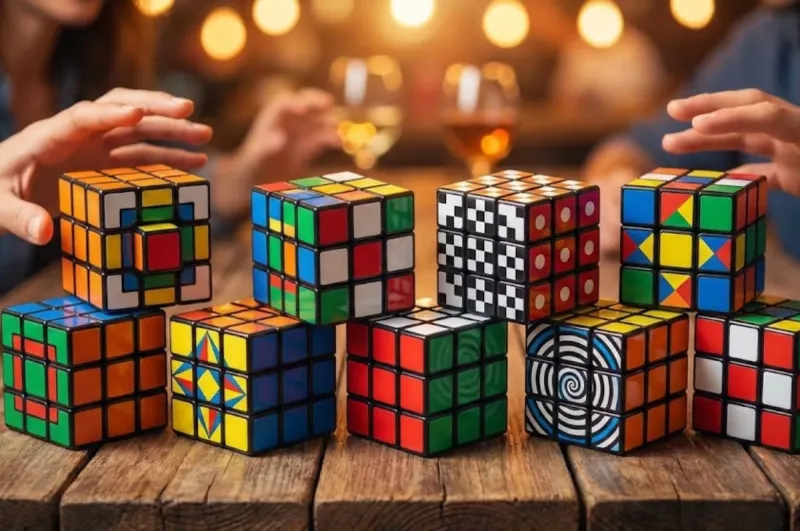
So, you’ve mastered the 3x3 Rubik's Cube. You can solve it in under a minute, or maybe you're just happy you can finish it at all. But did you know the cube is more than just a puzzle? It’s a canvas. By using specific sequences of moves—known as algorithms—you can transform your cube into stunning geometric art.
Today, we’re looking at 10 of the most impressive patterns you can create. Whether you want to leave your cube on a shelf as a decoration or show off your finger tricks to friends, these patterns are essential for every cuber's repertoire.
This is the most iconic pattern. It swaps the centers and corners so that every face looks like a mini-chessboard.
Simple yet elegant, this pattern moves each center piece to a face of a different color, creating a single 'dot' in the middle of each side.
This is where things start to look magical. It looks like a small 2x2 cube is nested inside a 3x3 cube.
Taking the previous pattern a step further, this creates a 1x1 cube inside a 2x2 cube, inside a 3x3 cube. It’s a favorite for display shelves.
The Anaconda creates a 'snake' of color that winds its way around the cube. It’s a great way to show how the pieces move relative to each other.
Similar to the Anaconda but with a slightly more complex path, the Python wraps around the cube in a distinct, serpentine fashion.
This pattern creates a large '+' or 'cross' on every single face. It looks incredibly symmetrical and clean.
Twisted Peaks creates two large triangular sections on the cube that look like mountain ranges from different perspectives.
One of the most visually complex-looking patterns, the Spiral makes the colors appear to swirl into the center of the faces.
The Superflip is famous in the cubing world because it is a state where every single edge piece is in the correct spot but flipped the wrong way. It is one of the furthest states from a solved cube!
The best part about these patterns is that they are reversible. To get back to a solved state, you can either perform the algorithm in reverse, or simply resolve the cube like you normally would. Since all the pieces are technically in a mathematically traceable state, it's great practice for your recognition skills!
Which one is your favorite? Tag us in your cube photos on social media!