7 Stunning Mirror Cube Patterns That Will Look Amazing on Your Shelf
Transform your Mirror Cube into art! Discover 7 stunning patterns like the Superflip and Cube-in-a-C...
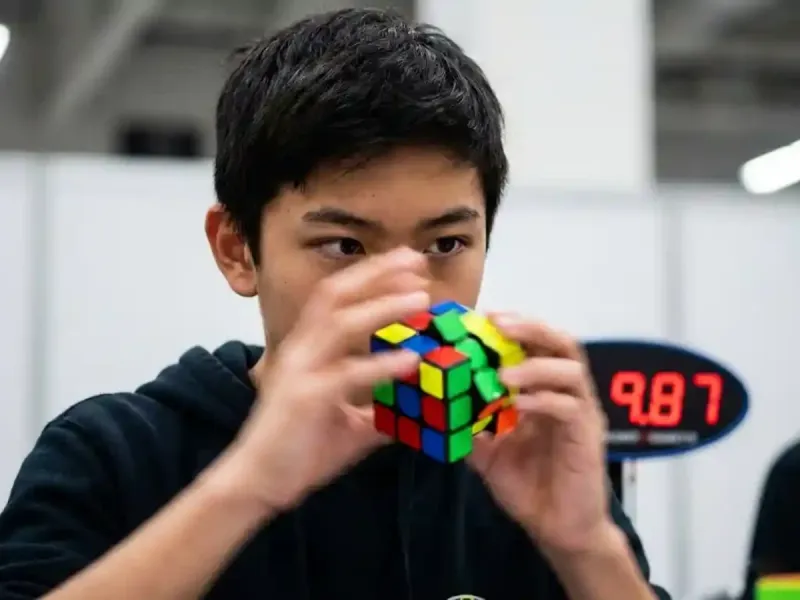
You’ve learned the algorithms. You’ve memorized the OLL and PLL cases. You can execute a T-Perm in under a second. Yet, your times have plateaued. The culprit? The pause. That awkward half-second where your hands stop, your eyes dart around the cube, and you desperately hunt for your next F2L pair. This is where the elite cubers separate themselves from the amateurs through the art of lookahead.
Lookahead is the ability to track the pieces for your next step while you are still executing the current one. In a perfect solve, your hands never stop moving. While you are inserting one F2L pair, your eyes are already identifying the corner and edge for the next pair, determining how they will move as you execute your current sequence.
The biggest mistake intermediate cubers make is turning at their maximum TPS (turns per second) all the time. If you turn faster than your brain can process the movement of pieces, you are forced to stop and 'find' the next case once you finish an algorithm. To master lookahead, you must slow your turning down to a speed where you can consistently see the next pieces without stopping. Ironically, a slower, fluid solve is almost always faster than a high-TPS solve riddled with pauses.
Don't just stare at the pieces you are currently moving. Try to keep your focus on the 'hidden' areas of the cube—the back slots and the top layer. Use your peripheral vision to note the colors of pieces as they fly by. Over time, you’ll start to recognize patterns and predict where a piece will land based on the moves you are making.
Lookahead is a marathon, not a sprint. It takes thousands of solves to develop the intuition required for seamless transitions. By prioritizing fluidity over raw turning speed, you'll find those elusive sub-10 or sub-15 times much easier to reach. Keep your eyes moving, keep the cube turning, and watch your personal bests tumble.